Parkinson’s disease is a neurodegenerative movement disorder that develops gradually and progresses over time. While the exact cause is unknown, researchers believe that in most people it results from a combination of genetic and environmental factors.
People worldwide living with Parkinson’s
0M
People in the US living with Parkinson’s
0M
New people diagnosed in the US every year
0K
Symptoms
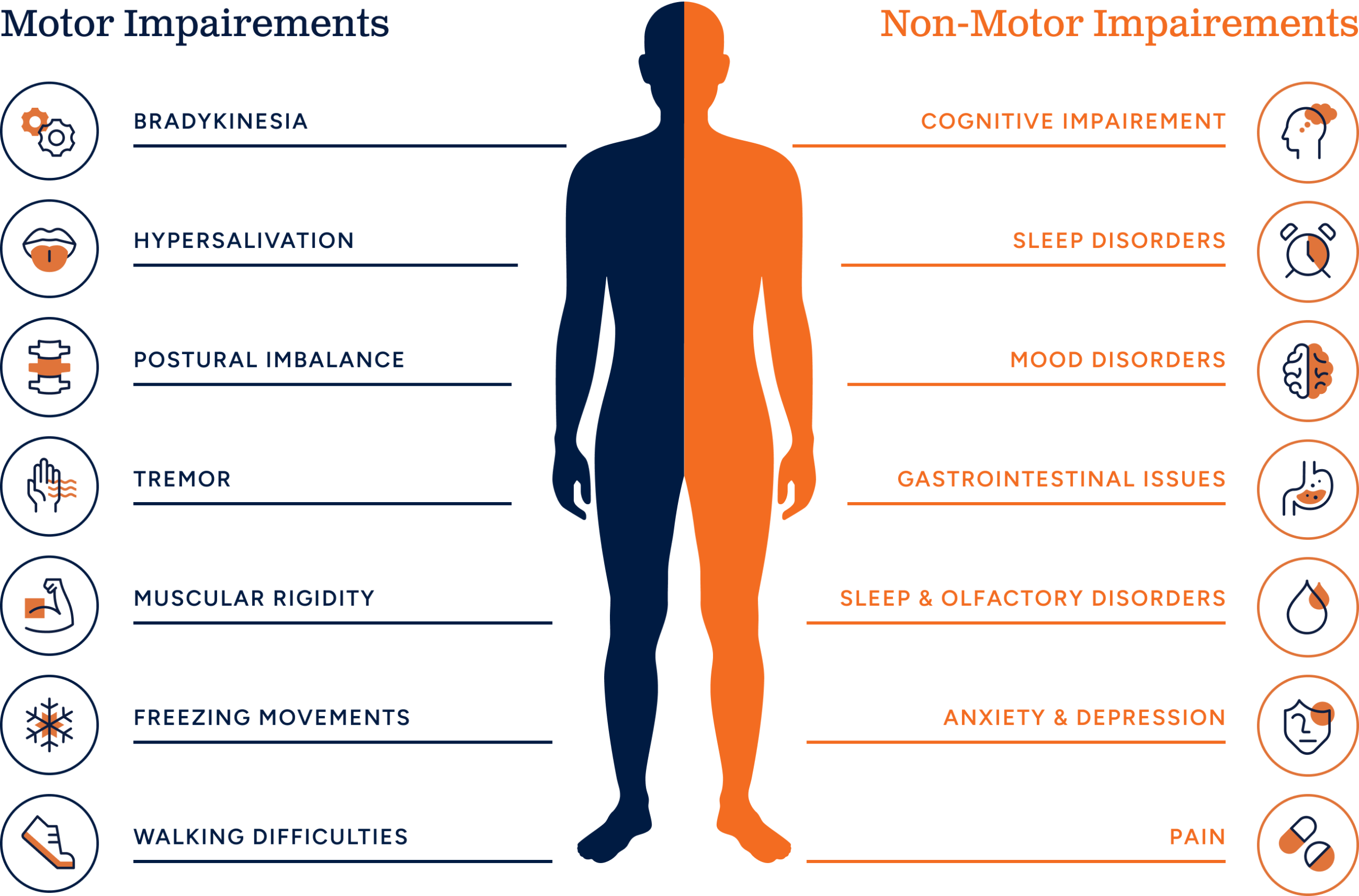
Parkinson’s symptoms vary by individual and often begin with subtle motor and non-motor changes that gradually progress. Below are the most common symptoms, though their severity and progression differ from person to person:
Stages
The medical community have been able to agree on a common path of progression that Parkinson’s follows. Doctors use this clinical rating scale to characterize the motor and non-motor symptoms of PD, how severe they are, and their impact on a person’s daily activities. On this scale, stages 1 and 2 represent early-stage, 2 and 3 mid-stage, and 4 and 5 advanced-stage PD.
Confined to a wheelchair or bed. A 24-hour caregiver is required. Many experience hallucinations and other non-motor symptoms.
Nutrition and PD
Embracing a diet rich in natural and organic foods, like the Mediterranean diet, fosters overall wellness and can aid in managing some non-motor Parkinson’s symptoms like digestive health, heart health, and memory function.
Embracing a diet rich in natural and organic foods, like the Mediterranean diet, fosters overall wellness and can aid in managing some non-motor Parkinson’s symptoms like digestive health, heart health, and memory function.
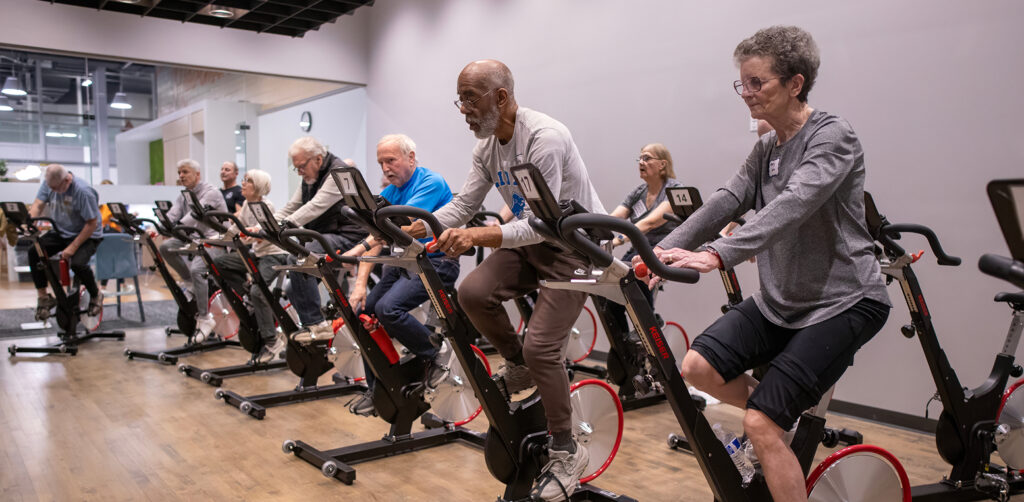
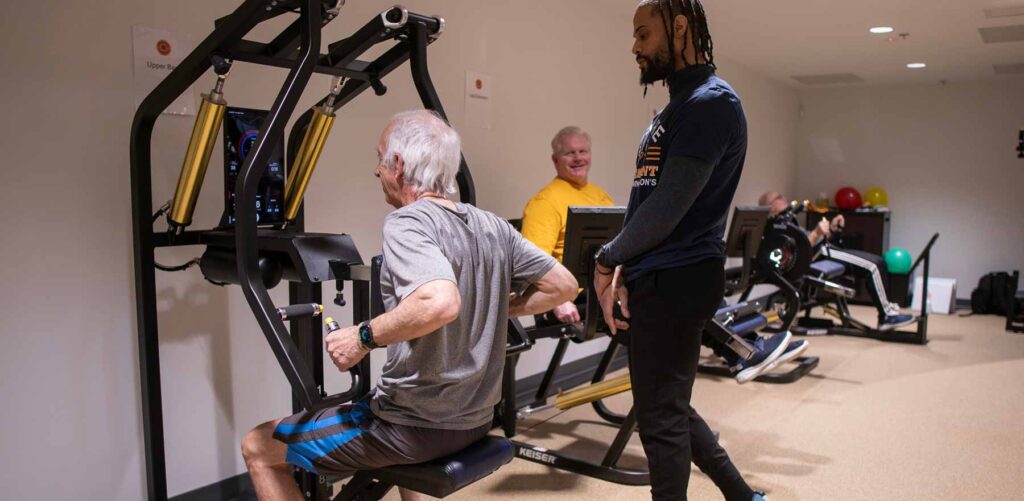
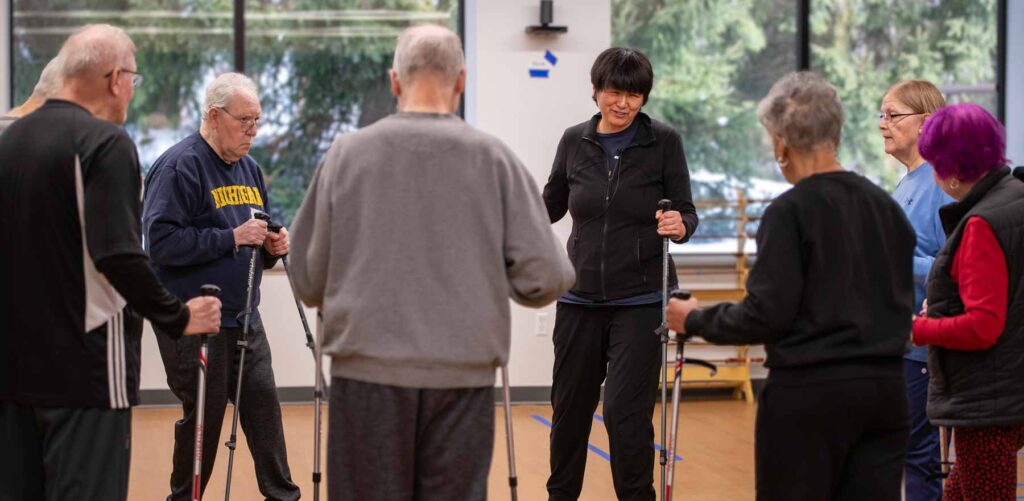
Participating in regular physical activity is crucial to maintaining motor functions such as flexibility, balance and mobility as well as providing relief from non-motor symptoms including depression, anxiety, constipation and sleep issues.
Research suggests that exercising 2.5 hours per week at a high intensity* can help manage the severity of symptoms and slow the progression of the disease.
To help manage your symptoms, create a program that includes a mix of the following: